

From its beginnings as a grand Victorian residence to its decades as a local school, the building has always been a place of growth and heritage.
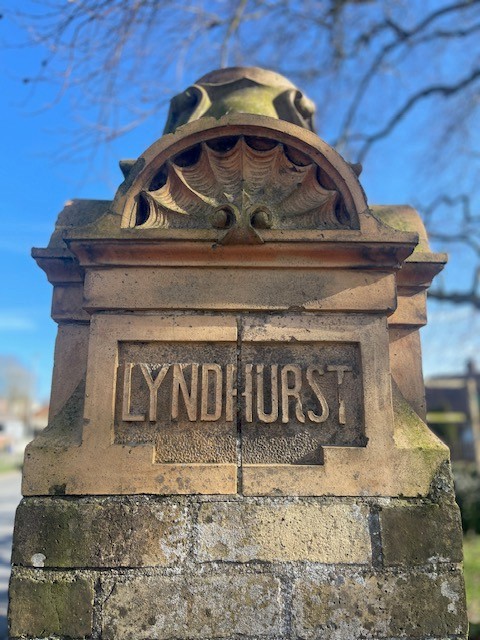 1891 – The RM English Era
The house was commissioned and built around 1891 for Robert Maxwell English, a prominent local figure and founder of the grain and seed firm R.M. English & Son.
As one of Pocklington’s most successful merchants and a Justice of the Peace (JP), English required a home that reflected his professional standing. He chose this site on Kilnwick Road to build a substantial Victorian villa for his family. The “monumental” scale of the building, with its high ceilings, large windows, and extensive gardens was a direct statement of his success in the agricultural industry.
1947 – Pocklington School
Following the English family’s tenure, the building was purchased by Pocklington School in 1947. It was initially used as a junior boarding house to accommodate the school’s growing number of pupils.
1950 to 1992 – Lyndhurst School
By 1950, the house transitioned into a standalone junior department known as Lyndhurst School. For over 40 years, it served as the town’s preparatory school. Generations of local children began their education within these walls before the prep school eventually moved to the main Pocklington School campus in 1992.
Lyndhurst Day Nursery Today
After the prep school relocated, the building transitioned into its current role as a private day nursery. We chose to keep the name Lyndhurst to honor the building’s long educational heritage.
Today, we utilise the same spacious Victorian rooms and large gardens that RM English originally designed for his own children. The building’s layout allows us to offer dedicated zones for different age groups, while the original garden now serves as a Nature Zone where children learn about the environment in the same spot where Pocklington’s history was shaped over a century ago.