

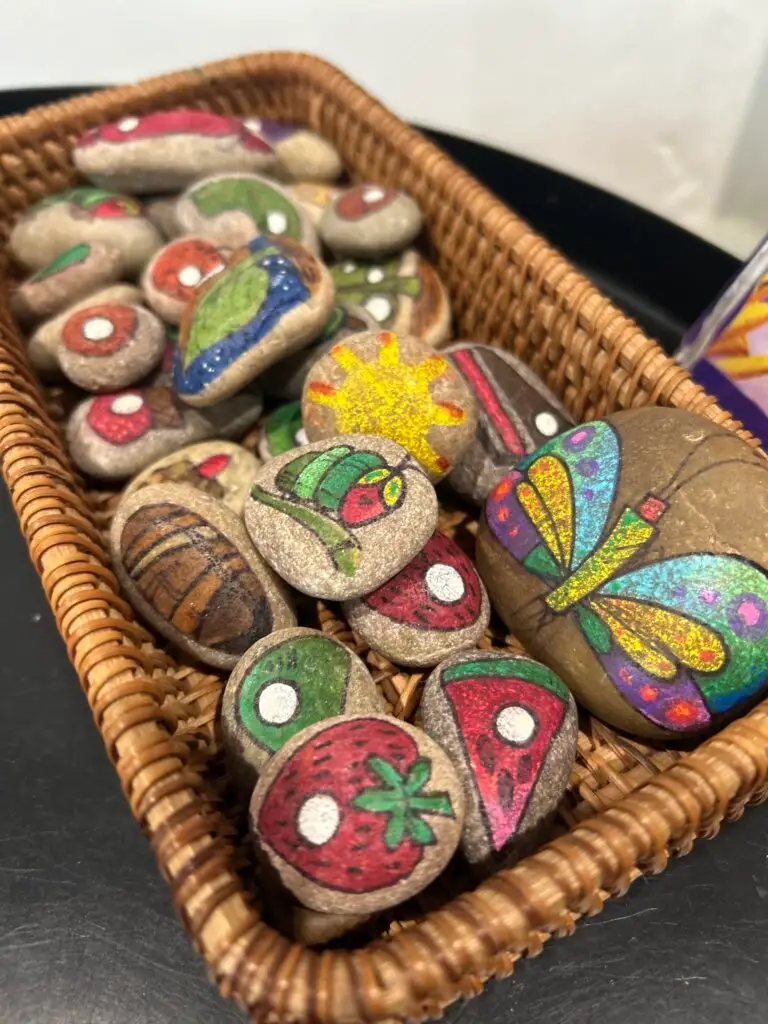
Engage in extended conversations about stories, learning new vocabulary.
Understand key concepts about print.
Write some letters accurately along with some or all of their name.
Enjoy listening to longer stories, remembering much of it and pay attention to more than 1 thing at once.
Develop communication, pronunciation and use a wider range of vocabulary.
Understand 2 part questions or instructions.
Be able to express a point of view and start a conversation, using talk to organise their play.
Begin to make sense of self and own family, developing positive attitudes about the differences between people.
Talk about what they see using all their senses in hands on exploration exploring materials and how things work.
Begin to understand life cycles, plant and care for seeds respecting the environment and living things.
Know there are different countries and talk about differences.
Explore different materials both indoors and outdoors.
Explore and respond to different natural phenomena in the nursery and on trips.
Notice differences between people, making connections between their families and others.
Develop sense of responsibility and being part of a community, showing more confidence in new social situations and become more outgoing with unfamiliar people.
Play with others, finding solutions to conflicts.
Understanding the importance of, and follow rules, remembering them without an adult to remind them.
Develop ways to be assertive and speak to others to resolve problems and talk about feelings gradually understanding how others may feel.
Become increasingly independent in own care and make healthy choices with food, and activities.
Use imagination in play, developing complex stories and taking part in pretend play using objects to represent something else.
Exploring colours, materials and textures developing own ideas to decide what to make.
Show emotions in drawings, increasing complexity and detail and begin to create closed shapes.
Listen and respond to sounds, expressing feelings.
Sing learnt songs and make up own around one they know.
Develop fast recognition of up to 3 objects, reciting numbers past 5 and showing fingers up to 5.
Compare quantities, solve problems with numbers up to 5.
Talk about and explore shapes, positioning and size/weight comparisons.
Begin to describe a sequence of events, notice patterns and errors in them along with describing patterns using informal language.

Site by Craig Pickles (www.YorkshireTechy.co.uk)